
HS Anatomical Girths
Designed by Horsemanship Saddlery UK Ltd.
There are 2 types;
'FreeStride' leather anatomical girths, both short and long variations
'Cee' girth, fleece-lined leather and neoprene anatomical girths for forward girth groove horses and ponies, short only.
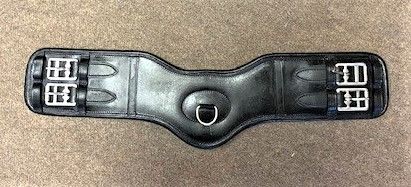
Top quality padded Italian leather. No elastic.
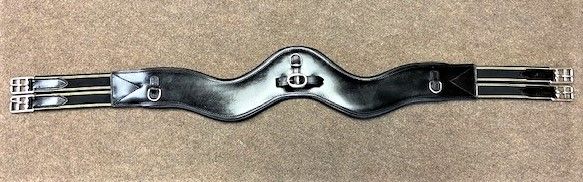
Top quality padded Italian leather. Strong elastic at both ends.
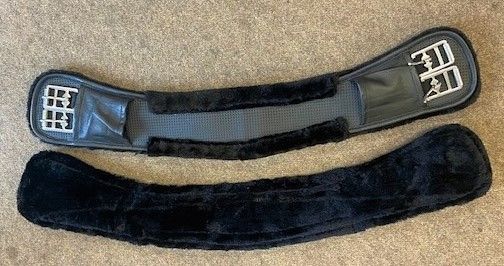
Fleece lined soft neoprene girth with very strong webbing core. Top quality soft, washable Italian leather girth strap pouches
Short, strong elastic at both ends.
The Problem with many Anatomical Girths
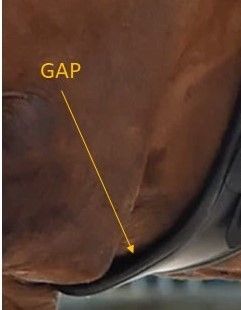
'Anatomical' Girths that don't fit
Many anatomical girths, including some VERY expensive ones, create rear ridge pressure, as their design means that they do not sit flat on the sternum.
The pressure is all at the rear, not spreading the load and leaves a gap at the front.
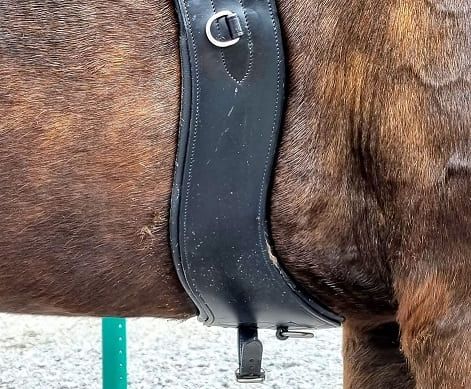
Our anatomical girths distribute pressure evenly
Our girths have a different design for the top 'Return' of the girth. After many trials, I have changed the angle of this, so that the girth lies flat against the sternum, distributing the pressure evenly across it.
How girthing problems can be solved by using anatomical girths
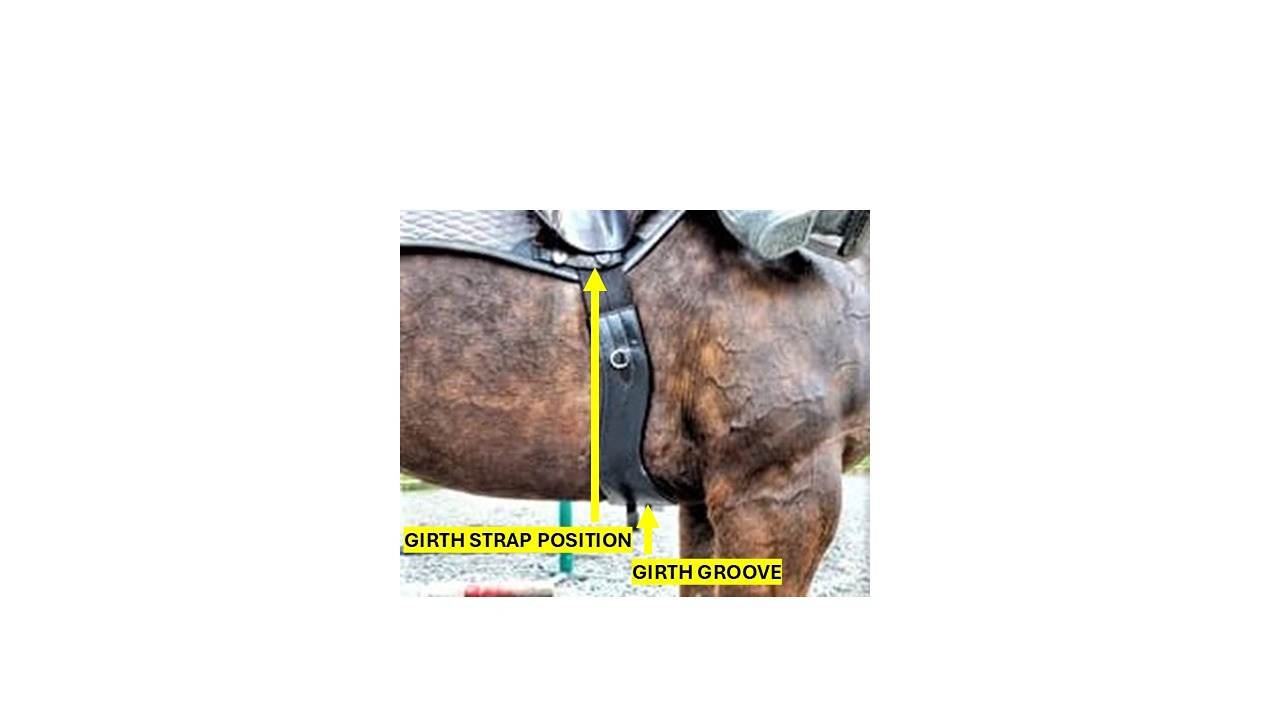
Any girth will automatically move to the shortest distance around your horse's body. Even if you tack up with the saddle in the right position, after a few minutes, the girth will find that shortest spot. This is the 'Girth Groove'.
In order for a saddle to remain where you place it, the girth straps must hang vertically when done up, but if your horse has a forward girth groove, then they will be pulled forwards. This, in turn, pulls the saddle forwards, into the shoulder, as they find their 'Vertical' and it is often further forward than the place where the saddle should sit.
Anatomical girths are shaped so that the girth can sit further forward, in the Girth Groove, whilst the girth straps are able to hang vertically, as they should.
Why Sizing Is So Important
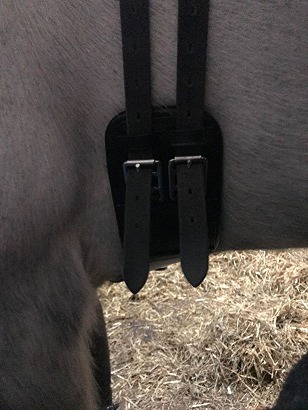
With a normal girth, it is only the length that matters, as it is a straight 'Strap'.
However, an anatomical girth has shape to consider as well.
With all girths, the buckles should sit well above the elbow to allow for free elbow movement without restriction. If there is restriction, then the stride will be shortened and the horse will be uncomfortable with the girth affecting his movement.
A long girth is easier to fit than a short one. With a long girth, the buckles should sit about mid way on the girth straps when fully tightened, whereas a short girth should have the buckles as close to the saddle flap or pad as possible, to prevent interference with the elbow.
The shape of the anatomical girth must also be considered, as the elbow cutouts must be in-line with the elbow as the leg comes back. A girth that is too short will have the cutouts too short and the elbow will not have free movement.
ALWAYS make sure that the girth is buckled up equally on both sides, or the elbow cutouts will not be level.